
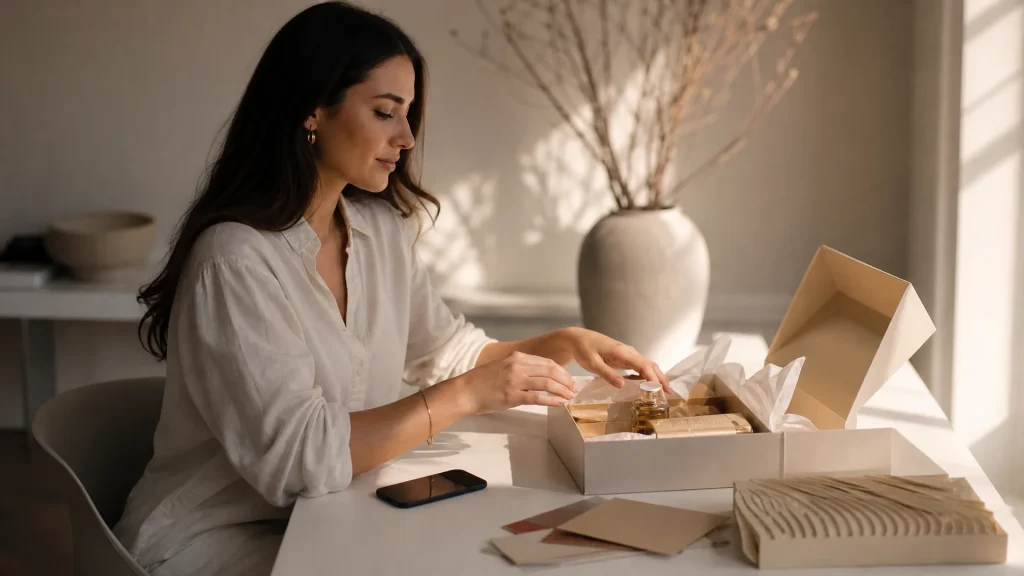
A creator posts an unboxing video. It gets a few thousand views, the brand shares a screenshot internally, and everyone moves on. That’s not a PR pack strategy. That’s a courier drop with a camera pointed at it.
South African brands are spending real budget on creator gifting, but most can’t say what it actually returned. PR packs that generate ROI need a different starting point: a goal, a chosen audience, and a way to measure whether perception actually shifted. This guide walks through how to build that from the ground up.
Why Most Creator PR Packs Fail to Deliver ROI
The ‘unboxing hype’ trap
Unboxing content feels like proof of success. It’s visual, shareable, and easy to screenshot for a slide deck. But views and likes on a single video don’t tell you whether the creator’s audience trusts your brand more, remembers your name, or is any closer to buying.
Chasing follower counts and reach numbers alone leads brands to send generic boxes to whoever has the biggest audience. The content looks good. The business impact rarely follows.
What ROI actually means for gifting campaigns
Real ROI on a PR pack means tracking outcomes tied to a brand goal. Did sentiment around your brand improve after the drop? Did engagement quality, comments, saves, shares, beat your benchmark? Did the creator’s audience overlap with your actual customer base?
None of that happens by accident. It requires treating the pack as a campaign, not a gift.
Building a Creator PR Pack Strategy Around Measurable Outcomes
Setting reach, engagement and sentiment goals before sourcing product
Before you choose a single item, decide what success looks like. Are you building awareness in a new city? Shifting sentiment after a rocky quarter? Driving sign-ups for a product launch? Each goal points to a different creator profile, product mix, and message.
MerchGuru is backed by Abstract7 Creative Media Solutions, a PR and communications consultancy with over 25 years of branding experience. That heritage means PR pack strategy starts from a communications brief, not a warehouse pick list. The same discipline used to plan a media campaign gets applied to what goes in the box and why.
Choosing creators for alignment, not just follower count
A creator with a smaller, closely engaged audience that matches your customer profile will usually outperform a bigger name with a mismatched following. Alignment means checking whether their content tone, values, and audience demographics actually fit your brand.
Treat each PR pack as a mini campaign brief, with a stated goal, target audience, and measurement plan. That’s what separates strategic creator seeding from once-off gifting that fades from memory. Write that brief before you contact a single creator.
Designing Branded PR Boxes That Tell Your Brand Story
Product selection as a storytelling device
Every item in a creator PR pack should earn its place. Random freebies dilute the message. A tightly curated selection tells a story about who your brand is and what it stands for.
A South African brand launching a product line might pair a hero item with a hand-picked homeware or drinkware piece and a printed note explaining the brand’s story. That way the creator’s audience sees a narrative, not just a freebie. Drinkware works well for daily-use recall. Apparel builds visibility beyond the unboxing moment. Tech accessories signal relevance for a younger, more digitally native audience. The right mix depends on the goal you set earlier.
Unboxing experience branding: packaging, sequencing and surprise
The box itself is part of the story. How items are layered, what the creator sees first, and where a small surprise sits in the sequence all shape how memorable the moment feels on camera and in person.
Good unboxing experience branding isn’t about excess. It’s about intention: packaging that reflects your brand’s visual identity, sequencing that builds anticipation, and a final detail that gives the creator something worth mentioning. That’s what turns a delivery into content people actually want to watch and remember.
Custom vs Ready-to-Brand Merch for Creator Seeding Campaigns
When bespoke sourcing pays off
Custom-sourced items make sense when a campaign has a specific narrative to tell, a product launch to support, or a creator tier that warrants a fully bespoke experience. Bespoke sourcing gives you control over materials, branding placement, and the exact story each item tells.
It takes longer to plan and usually costs more per unit. For a flagship seeding wave, or a small group of high-alignment creators, that investment tends to pay off in impact and shareability.
When ready-to-brand items are the smarter budget play
For broader seeding waves, sending packs to a larger group of micro-creators for example, ready-to-brand merchandise is often the smarter budget play. You still get consistent branding and a curated feel, without the lead time or per-unit cost of a fully custom build.
This is where a cost-effective influencer marketing South Africa approach earns its name: match the sourcing model to the campaign scale, rather than defaulting to bespoke for everything. Weighing the custom vs ready-to-brand merchandise guide against your campaign goals helps you decide which route fits each wave of a seeding campaign. The same logic applies to branded merchandise versus generic gifts for marketing ROI: spend where it moves the needle, not where it just feels generous.
Measuring ROI on Influencer Gifting: What to Track and Report
Reach, engagement and sentiment metrics that matter
Reach tells you how many people saw the content. Engagement tells you how many actually interacted with it: comments, saves, shares, click-throughs to a link. Sentiment tells you what people said and how they felt about your brand afterward.
Brands that track sentiment and engagement after a gifting drop, rather than only counting unboxing views, build a clearer picture of whether a PR pack actually shifted perception over time. Set benchmarks for each metric before the campaign launches, not after.
Reporting back to stakeholders and refining the next seeding wave
A single gifting wave is a data point, not a verdict. Report results against the goals you set at the start: reach, engagement, sentiment. Use what you learn to refine creator selection, product mix, or unboxing sequencing for the next wave.
Brands that run creator seeding as a recurring, iterative programme build more durable brand recall than those doing a single splashy drop and moving on. Consistency compounds. Reviewing real branded merchandise case studies from South African brands is a useful way to see what a well-measured campaign actually looks like in practice. The gift tiering and timing strategy for retention offers a parallel framework worth borrowing for how often to seed and to whom.
Getting Your Creator PR Pack Strategy Right From the Start
Creator PR packs for South African brands work when you build them as a communications strategy first and a sourcing exercise second. Goal-setting, creator alignment, storytelling through product choice, and a clear measurement plan all need to be in place before a single box ships.
That’s the gap between content that generates buzz and a campaign that generates ROI. If you want to see what makes MerchGuru’s approach to promotional goods different, it comes down to pairing Abstract7’s PR and communications heritage with real product sourcing expertise. Every pack gets briefed like a campaign, not ordered like a stock list.
If you’re planning your next seeding wave, start with a clear brief. Learn how to brief a promotional gifts supplier so your goals, audience, and measurement plan are locked in before sourcing begins. Then reach out through MerchGuru’s done-for-you sourcing service to build a custom, ROI-measured PR pack for your next creator campaign.