
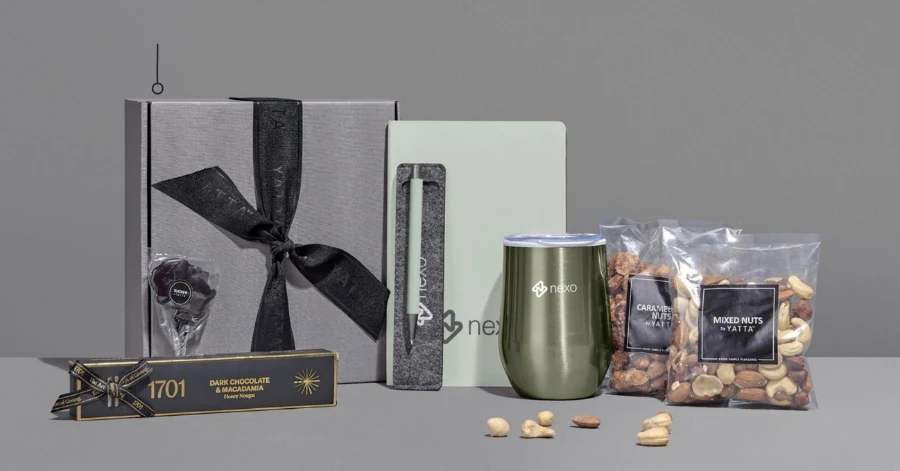
Every gift your brand sends is a decision, and that decision communicates something before the recipient even opens the box. When you’re weighing corporate branded merchandise vs generic gifts, you’re not just comparing price tags. You’re choosing between a one-time transaction and a long-term brand impression. For marketing managers working with tight budgets and high expectations, that distinction matters more than most gifting guides let on.
Why the Gift You Choose Sends a Brand Signal
Think about the last time you received a gift from a company. Did it feel considered, or did it feel like a line item someone ticked off a checklist?
Every corporate gift is a brand moment. A generic, unbranded item might be useful, but it carries no identity, no story, and no lasting connection to your organisation. Branded merchandise, by contrast, does double duty: it gifts something of value and keeps your brand visible in the recipient’s world long after the moment of giving.
Most marketing managers face some version of this tension: spend less on something functional, or invest more in something that works as a marketing tool. The right answer depends on what you’re actually trying to achieve, and that’s what this guide helps you work out.
Brand Recall: The Hidden ROI of Branded Merchandise
Why recipients remember branded gifts longer
Physical objects create stronger memory associations than digital touchpoints. When someone uses a branded item, a quality tote bag, a ceramic mug, a well-made notebook, they interact with it repeatedly, in contexts that feel personal and routine. Each interaction reinforces the brand connection in a low-pressure, high-trust environment.
That’s the core advantage of branded merchandise: it earns repeated exposure without repeated spend. Research from the Promotional Products Association International (PPAI) shows that a large majority of recipients can recall the brand name on a promotional product they’ve received, a retention rate that consistently outperforms many digital ad formats. The branded merchandise benefits here aren’t theoretical; they’re grounded in how human memory actually works.
Daily-use items, drinkware, bags, apparel, are particularly effective. They travel with the recipient, sit on their desks, and get seen by colleagues, clients, and commuters. Your brand keeps showing up, without buying another placement.
Merchandise brand recall vs. digital ad impressions
A digital ad impression lasts seconds. A quality branded item lasts months, often years. That gap in lifespan directly affects how deeply a brand registers in the recipient’s memory.
Digital advertising excels at reach and targeting, but it doesn’t create the kind of tactile, repeated exposure that builds genuine familiarity. Studies tracking how long after receiving an item a recipient still associates it with the gifting brand consistently show promotional products outperforming short-form digital formats on unaided recall. The physical presence of an object keeps your brand in the recipient’s environment in a way no banner ad or sponsored post can replicate.
Cost Per Impression: Branded Merchandise Punches Above Its Weight
Unit cost is the wrong metric for evaluating branded merchandise. The right metric is cost per impression (CPI), how much each brand exposure actually costs you over the lifetime of the item.
Here’s a practical way to think about it. A branded travel mug costs a meaningful amount upfront. But if that mug is used daily during a commute or in an office, it generates brand impressions every single day, for the user and for everyone around them. Over 12 months, that’s hundreds of individual exposures from a single, once-off investment. The CPI drops to a fraction of a cent per impression.
The Advertising Specialty Institute (ASI) has consistently found that promotional products deliver among the lowest cost-per-impression of any advertising medium, often under one cent per impression for items used repeatedly over months. Compare that to the CPI for paid social, display advertising, or out-of-home placements, and the case for promotional product effectiveness is hard to dismiss.
The implication for budget-conscious marketers is straightforward: cost per impression, evaluated over an item’s full lifespan, is rarely as expensive as the unit price suggests. The real question isn’t “can we afford branded merchandise?”, it’s “what are we leaving on the table by not using it?”
Recipient Perception: How Branded vs Unbranded Gifts Land Differently
Quality and intentionality signal brand values
Recipients don’t just receive a gift, they interpret it. A thoughtfully chosen, well-made branded item signals that your organisation took the time to consider what they’d value and to align it with your brand identity. That intentionality registers as respect.
This is where branded vs unbranded gift impact shows up most clearly. When a client or employee receives a premium branded set, a notebook, pen, and drinkware that work together aesthetically and functionally, it tells a story about the kind of company you are. It says you care about craft, consistency, and the relationship. That’s a brand values statement delivered without a single word of copy.
MerchGuru is backed by Abstract7 Creative Media Solutions, a PR and communications consultancy with over 25 years of branding experience. That background shapes how MerchGuru approaches gifting, not as catalogue selection, but as brand strategy in physical form. The goal is always to connect, delight, and be remembered.
Generic gifts and the missed connection
A generic, unbranded gift isn’t necessarily a bad gift. But it is a missed opportunity. It doesn’t extend your brand narrative, it doesn’t create a lasting association, and it doesn’t give the recipient anything to connect back to your organisation.
In the South African corporate gifting market, this distinction is increasingly recognised. Premium branded gift sets, combining items like a branded notebook, pen, and drinkware, have grown in popularity for client onboarding and milestone gifting precisely because they signal considered investment in the relationship. When the gift feels curated rather than convenient, it lands differently.
For corporate gift ideas for employees in South Africa, the same logic applies internally: branded items reinforce belonging and culture in a way a voucher or generic hamper simply can’t.
Strategic Positioning: When Branded Merchandise Becomes a Brand-Building Tool
The most effective branded merchandise programmes aren’t built around individual gifting moments, they’re planned around a brand calendar. Events, client onboarding, staff milestones, seasonal campaigns: each is a moment where the right item, delivered at the right time, does genuine brand-building work.
This is where branded merchandise benefits extend well beyond the gift itself. A well-executed merchandise strategy creates consistency across touchpoints, the same quality, the same aesthetic, the same brand voice, whether the item lands at a trade show or in a new client’s welcome pack. It shows your organisation thinks about brand experience end to end.
Three trends are shaping how South African marketers approach this in 2026:
Premiumisation, recipients are more discerning. A lower-quality item with a logo can actively harm brand perception. Investment in better materials and finishes pays back in how the brand is perceived.
Sustainability, eco-conscious materials and reusable items are no longer a niche preference. They reflect brand values that resonate with employees and clients alike.
Hyper-personalisation, moving beyond generic branding to items tailored to the recipient’s role, preferences, or milestone. A personalised item creates a stronger emotional anchor than a mass-produced one.
Understanding how branded merchandise for events drives lasting ROI is a practical starting point for any brand planning a 2026 events calendar, the same principles of intentionality and use-case planning apply across every gifting context.
Making the Right Call: A Simple Decision Framework
If you’re deciding between branded merchandise and a generic gift, work through these four questions:
How deep is the relationship you’re investing in? For key clients, senior prospects, or long-serving employees, a branded item signals the depth of that relationship. For broad, low-engagement audiences, a lower-cost option may make sense, but the opportunity cost of missing a brand impression is still worth weighing.
What’s your budget horizon? If you’re thinking per-unit, branded merchandise can feel expensive. If you’re thinking per-impression over 12 months, it almost always wins on efficiency. Reframe the calculation before making the call.
How important is brand alignment? If you’re in a brand-building phase, launching, repositioning, or trying to deepen client loyalty, every touchpoint matters. A generic gift works against that goal. Branded merchandise supports it.
What’s the usage context? Items used daily (drinkware, bags, stationery) generate the most impressions and justify the investment most clearly. Items that might sit in a drawer deserve more scrutiny, branded or not.
For any situation where brand recall and relationship-building matter, which is most situations in B2B and professional services, branded merchandise is the stronger choice. Not because it’s more expensive, but because it keeps working long after the moment of giving.
MerchGuru’s done-for-you sourcing service is built for exactly this kind of strategic thinking: helping you find the right items, at the right quality, aligned to your brand, without spending hours trawling catalogues. If you’re ready to build a branded merchandise strategy that actually moves the needle, start a conversation with the MerchGuru team. We’d love to help you create something worth remembering.