
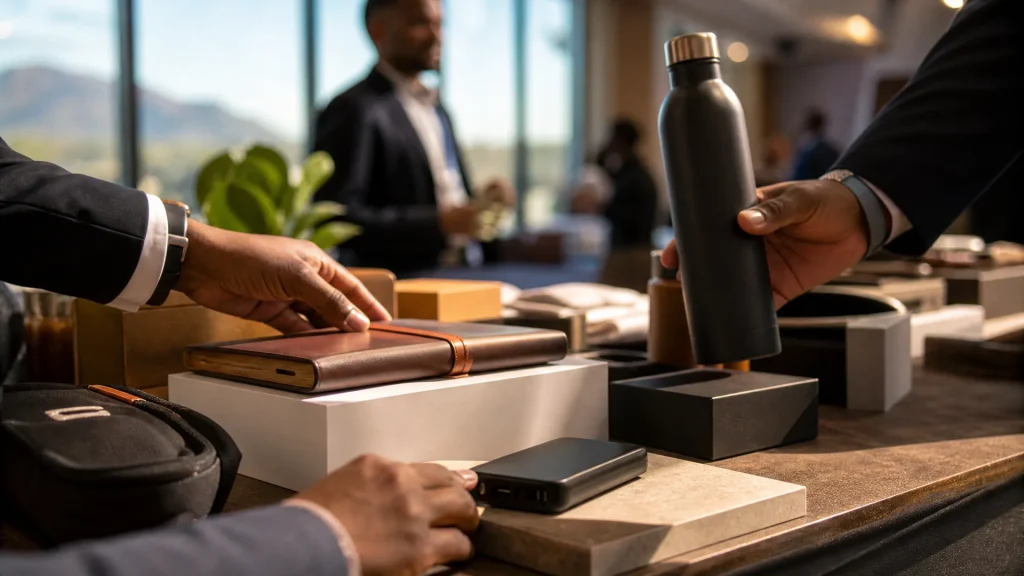
Picking branded merchandise for a corporate event usually starts in the wrong place: browsing a catalogue for whatever looks good, then working backwards to justify the spend. It should work the other way round. Good branded merchandise for corporate events in South Africa starts with the event itself, its purpose, its audience, and the feeling you want people to leave with. Get that right, and the products practically choose themselves.
Why Event Type Should Drive Your Merchandise Strategy
Every event has a job to do. A conference exists to educate and connect people. A gala dinner exists to celebrate and reward. A product launch exists to create buzz. Merchandise should reinforce whichever job is at hand, not sit alongside it as an afterthought.
That means the first question in any merchandise brief shouldn’t be “what can we brand?” It should be “what does this room need to feel like?” Once you know that, budget tiers, product categories, and even packaging start to make sense on their own.
Conferences and Summits
Conferences run on long days, dense agendas, and a lot of walking between sessions. Attendees are there to learn and network, so useful, practical items tend to land better than novelty ones. Think items people will actually reach for during the day: something to carry notes in, something to charge a phone with, something to drink from between sessions.
Gala Dinners and Award Evenings
A gala dinner has a completely different emotional register. It’s about prestige, recognition, and a night people remember. Merchandise here should feel considered rather than mass-produced: a premium finish, a smaller print run, packaging that matches the occasion. A gala dinner calling for premium drinkware and apparel needs a completely different merchandise brief to a high-energy product launch activation built around tech gadgets and social-friendly giveaways. Confusing the two is one of the fastest ways to undercut an otherwise well-run event.
Corporate Event Merchandise Ideas by Occasion in South Africa
Once the event’s purpose is clear, you can build a shortlist of corporate event merchandise ideas for South Africa that actually fits the occasion, rather than defaulting to whatever’s on promotion.
Conference and Summit Giveaways
For conferences and summits, practical, all-day-use items tend to outperform anything purely decorative. Power banks, branded notebooks, reusable water bottles, and lightweight tote bags all get carried from session to session, which means your logo gets seen far more than once. A well-chosen branded tote or backpack also solves a real problem for delegates juggling handouts and devices, which makes the brand association a positive one.
Product Launch and Activation Swag
Activations and product launches call for a different energy. These are moments built for social sharing and instant impact, so swag should be bold and visual, with a bit more play involved: think standout tech gadgets, statement apparel, or items designed to photograph well. Because activations are often the most visible, high-energy events on a brand’s calendar, it’s worth reviewing a trade show merchandise strategy approach even if your event isn’t strictly a trade show. The same principles around visibility and shareability apply.
Internal Launches and Team Events
Internal events, a strategy launch, a year-end function, a culture day, have a quieter but equally important job: making employees feel valued and aligned. Apparel works particularly well here, especially when it’s genuinely wearable rather than obviously “corporate.” If clothing is part of the plan, it’s worth thinking through a branded apparel strategy for corporate events so the pieces get worn well beyond the event itself.
Budget Tiering: Matching Spend to Impact
Not every attendee needs the same gift, and treating them as if they do is usually where merchandise budgets go wrong. The most effective approach splits spend into tiers, matched to how much impact each attendee group can realistically have on the brand.
Low-Cost Bulk Items vs Premium Hero Gifts
The bulk of your attendee list, general conference delegates, exhibition visitors, event staff, is best served by lower-cost, high-volume items: pens, notebooks, lanyards, simple drinkware. These need to look good and hold branding well, but the per-unit cost should stay modest because the goal is reach, not exclusivity.
Sitting above that is a smaller batch of “hero” gifts: a premium item reserved for speakers, sponsors, media, or key clients. This is where you spend more per unit, because the group receiving it is smaller and more influential. Getting this tiering right depends partly on understanding bulk promotional merchandise pricing in South Africa, since unit costs shift significantly once you scale from a few dozen items to a few thousand.
When to Splurge on VIP Attendees
VIP and speaker gifts are worth the extra spend because these are the people most likely to talk about your brand afterwards: on stage, in the media, or within their own networks. A well-chosen premium gift, quality drinkware, a leather-look notebook, a considered tech accessory, signals that your brand pays attention to detail. Sponsors deserve similar treatment, since their support often extends beyond the event budget itself.
Choosing Custom vs Ready-to-Brand Merchandise for Your Event Timeline
One of the most consequential decisions in any merchandise plan is whether to go fully custom or work with ready-to-brand stock. Custom manufacturing, a bespoke product shape, a unique packaging design, a fully tailored colourway, gives you the most control over brand alignment, but it takes time. Production, shipping, and quality checks all add weeks to the process.
Ready-to-brand items, by contrast, are existing stock products that get decorated with your logo close to delivery. They’re faster to turn around and lower risk for tighter timelines, though they offer less scope for a fully bespoke look.
Neither option is inherently better. It’s a trade-off between lead time and customisation. If your event date is fixed and non-negotiable, ready-to-brand stock is usually the safer route. If you have a longer runway and want something that can’t be found anywhere else, custom manufacturing is worth the wait. A closer look at custom vs ready-to-brand merchandise is worth reading before locking in a supplier, since the decision affects pricing as much as timing.
Lead Time, Logistics, and Bulk Ordering in South Africa
Merchandise planning in South Africa comes with its own set of practical constraints, and ignoring them is one of the more common ways events end up scrambling in the final week.
Planning Your Order Timeline
Corporate events in South Africa increasingly run on tighter planning windows, partly because of load-shedding-related disruptions and partly because venue demand has picked up again. That combination has pushed many brand managers to lock in merchandise orders six to eight weeks ahead, rather than leaving it to the final fortnight. Imported stock adds another layer of risk, since customs clearance and shipping delays can quietly eat into whatever buffer you thought you had. Working through a proper planning your branded merchandise turnaround time timeline early in the event planning process removes a lot of that uncertainty.
Working with a Local Supplier for Reliable Delivery
Sourcing locally reduces exposure to import delays and gives you more flexibility if quantities or designs need to change late in the process. A local supplier can also usually turn around samples faster, which matters when sign-off deadlines are tight. This becomes especially important for bulk orders, where even small production hiccups can multiply across thousands of units.
Building Brand Recall with Sustainable, Daily-Use Merchandise
The best corporate event merchandise doesn’t stop working once the event ends. Items that get used daily, a water bottle on a desk, a tote bag on a grocery run, a notebook in a meeting, keep the brand visible long after the last session wraps up.
Sustainable options such as reusable drinkware, cotton totes, and eco-notebooks are becoming a default request from procurement teams at larger South African corporates in 2026, not just a nice-to-have add-on. That shift makes sense: eco-conscious items tend to align with practical, daily-use categories anyway, so choosing sustainably often means choosing for longevity too. A deeper look at eco-friendly promotional products is a useful next step for brand managers weighing this into their event brief, and it’s worth pairing with a read on how branded merchandise drives lasting event ROI to see how daily-use items translate into ongoing brand exposure well beyond the event date.
Partnering with a Strategic Merchandise Supplier for Your Next Event
Choosing branded merchandise for a corporate event isn’t really a procurement task. It’s a brand decision. It touches how attendees experience your event, what they remember about it, and what they carry back into their own daily lives afterwards.
MerchGuru pairs creative strategy (via Abstract7 Creative Media Solutions’ 25+ years of branding experience) with expert product sourcing, so every item is chosen to tell your brand’s story, not just fill a swag bag. That means starting with your event’s purpose and audience, not a product catalogue, and building a merchandise plan, tiered budgets, realistic timelines, and product categories, that fits the occasion.
If you’re planning a conference, activation, gala, or internal launch anywhere in South Africa, it’s worth talking it through before you commit to a supplier. Partner with a strategic merchandise supplier and get a tailored merchandise strategy built around your event, your audience, and your timeline, not a generic order form.