
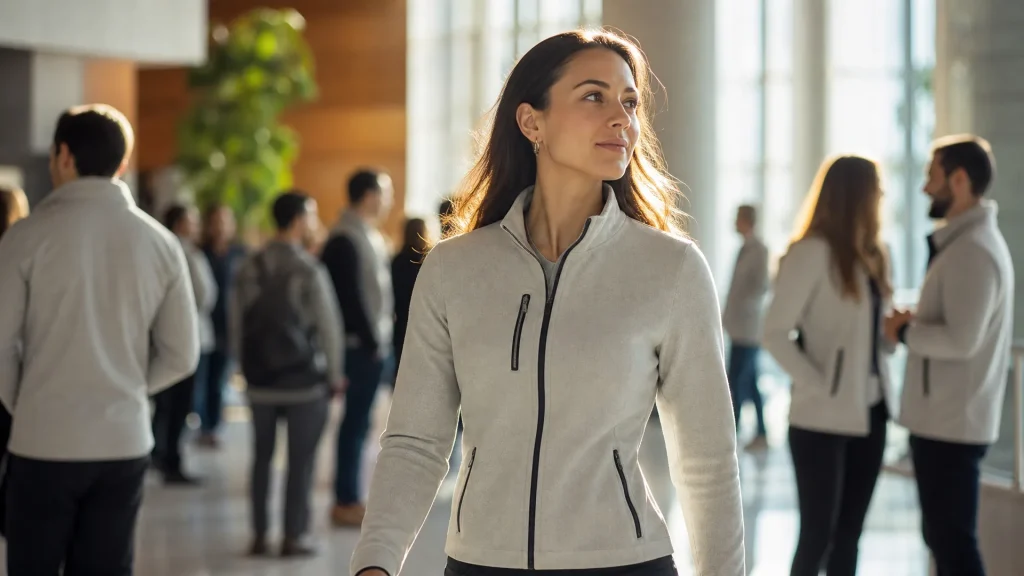
Branded apparel for corporate events is one of the most powerful, and most underused, tools in a brand marketer’s toolkit. Done right, it doesn’t sit in a drawer. It walks into meetings, shows up at braais, and travels to weekend markets, carrying your logo into spaces no digital ad can reach. Done wrong, it’s a faded cotton reminder of a mediocre event. The difference between those two outcomes comes down to strategy: choosing the right silhouette, fabric, decoration method, and fit for your audience, your event, and your brand.
MerchGuru is backed by Abstract7 Creative Media Solutions, a PR and communications consultancy with over 25 years of branding experience, which means every apparel recommendation here is grounded in real campaign strategy, not just product sourcing.
More Than a Logo on a Shirt: Apparel as a Brand Ambassador Tool
Promotional wearables consistently rank among the most recalled forms of brand advertising. Unlike a digital impression that vanishes in seconds, a well-made branded shirt generates repeated impressions over months, or years, of genuine wear. That’s not a giveaway. That’s a brand ambassador with legs.
The strategic shift is simple: stop thinking about branded apparel as a cost line and start thinking about it as a media placement. Every recipient who wears your piece into their daily life extends your brand’s reach organically. But only if the piece is worth wearing.
That’s where fit, fabric, and finish matter so much. A boxy, scratchy shirt in the wrong colourway gets retired after the event. A well-cut, breathable polo in a colour that flatters becomes part of your client’s daily routine. Understanding how branded merchandise at events drives lasting ROI starts with accepting that the quality of the piece determines the length of its media life.
Choosing the Right Apparel for Your Corporate Event
No single silhouette suits every event. Match the apparel to the energy of the occasion and the lifestyle of your audience, and you immediately increase the chances it gets worn again.
Corporate Polo Shirts: The Workwear Classic That Still Delivers
Corporate polo shirts are the workwear standard for good reason. They sit comfortably between formal and casual, making them appropriate for trade shows, brand activations, team uniforms, and client-facing staff. A well-embroidered polo signals polish without stiffness, it says “professional” without saying “stuffy.”
For trade shows and expos where staff represent your brand face-to-face, the polo is hard to beat. It’s tidy enough for a boardroom approach, relaxed enough for a long day on your feet. Choose a piqué fabric for structure and breathability, and invest in a consistent cut across the team, nothing undermines brand cohesion like five different fits wearing the same logo.
Branded T-Shirts for Event Giveaways: When Casual Connects
Branded t-shirts for event giveaways work best when the event energy is high and the audience is on the move, festival launches, fun runs, year-end activations, and community events. A tee is democratic and wearable, but it needs to earn its place in the recipient’s wardrobe.
Opt for a fitted, structured cut rather than a boxy promotional blank. A 160–180 GSM cotton or cotton-blend tee holds its shape wash after wash, which is exactly what you need when the shirt is also your brand’s ambassador in month three. Keep the print placement bold but purposeful, a chest logo, a back statement, or a sleeve detail. The goal is a shirt people choose to wear, not one they feel obligated to take home.
Quality and Durability: The South African Climate Test
South Africa’s outdoor event culture is real and relentless. Corporate fun runs, year-round expos, sports days, and summer activations held in peak heat mean your branded apparel faces conditions that European promotional merch never has to. A shirt that wilts or fades after two washes doesn’t just fail the wearer, it reflects on the brand wearing it.
Fabric weight matters here. For casual event tees, 160–180 GSM is the practical floor. For polos and branded workwear worn through a full working season, 200–220 GSM gives you structure that survives the wash cycle and the Highveld sun. For outdoor or high-activity events, moisture-wicking polyester blends are worth the investment, they manage sweat, dry fast, and keep the wearer comfortable, which means they keep wearing the shirt.
Colorfastness is non-negotiable in the SA UV environment. Ask your supplier specifically about reactive-dyed fabrics for coloured garments, and confirm that print inks are rated for outdoor durability. A fading logo is a fading impression, and it tells your audience that you didn’t care enough to get the detail right. In this climate, apparel quality is a brand decision, not a nice-to-have.
Branded Workwear Gifting: When Apparel Becomes a Long-Term Brand Asset
There’s a meaningful difference between apparel that does its job on event day and apparel that keeps working for months afterward. Branded workwear gifting is the latter, a deliberate strategy to put quality pieces in recipients’ hands that they’ll return to again and again.
A corporate polo shirt distributed at a trade show continues generating brand impressions long after the event ends. Every time the recipient wears it to a meeting, a braai, or a weekend market, your logo is in the room, without any additional spend on your part. That’s the long-tail value of getting the piece right.
For your 2027 event planning cycle, consider building branded workwear gifting into your post-event strategy rather than treating apparel as a day-of giveaway. A premium hoodie, a structured fleece, or a quality quarter-zip sent as a follow-up gift lands differently than a tee handed out at a registration desk. Paired with thoughtful packaging, it becomes a brand touchpoint that recipients associate with care and quality. Explore corporate gifting ideas for employees in South Africa to see how apparel fits into a broader gifting strategy.
Getting Bulk Apparel Customisation Right
Bulk apparel customisation involves more decisions than most brands anticipate, and more lead time. Getting these right protects your budget and your brand.
Decoration Methods: Print, Embroidery, and Heat Transfer
The decoration method should match the occasion’s intent as much as the design itself.
Screen printing suits high-volume event giveaways where cost-per-unit matters. It’s fast, durable, and reproduces bold graphic designs cleanly across large quantities. It’s the go-to for festival tees and fun run shirts.
Embroidery signals a premium, long-life piece. The thread raises off the fabric, gives a tactile quality that print can’t match, and survives repeated washing better than most other methods. It’s the right call for corporate polo shirts, branded workwear gifting, and any piece you want recipients to associate with quality.
Heat transfer suits designs with photographic detail, gradients, or complex full-colour artwork that screen printing can’t reproduce cleanly. It works well for shorter runs and bespoke pieces, though it requires careful fabric selection to ensure durability under SA washing conditions.
Sizing, Ordering, and Lead Times for SA Events
South Africa’s workforce and event audiences are diverse in body type, and your sizing range should reflect that. Running a range from XS to 4XL as standard, rather than treating extended sizes as an afterthought, signals genuine inclusion and avoids the embarrassment of running out of sizes on the day.
For lead times: plan for a minimum of three to four weeks from artwork approval for screen-printed tees in volume. Embroidered pieces and more complex orders need four to six weeks. Factor in SA public holidays, peak season supplier demand (October through January is consistently busy), and any import lead times on specialist blanks. Brief your supplier early, quality bulk apparel customisation cannot be rushed without compromising the result.
Make Every Piece Work Harder for Your Brand
The apparel itself is only part of the story. How you present, pair, and position it determines how much brand equity it actually builds.
Packaging matters. A quality tee folded into a branded tissue-lined bag lands as a gift. The same shirt stuffed into a clear poly bag lands as a freebie. The presentation signals the value you’re placing on the relationship.
Pair apparel strategically. A branded cap or tote alongside your event shirt extends the brand’s visual presence and gives recipients a ready-made outfit for your next activation. Complementary pieces also increase the chance that at least one item becomes a regular-wear favourite, and brings the rest along with it.
Align colour to brand identity, not trend. The most common mistake in branded apparel for corporate events is choosing a colourway because it “looks nice” rather than because it reflects the brand. Your apparel should be immediately recognisable as yours, which means your brand’s primary colours, not the season’s trending Pantone. If your brand is navy and gold, your event shirts should be navy and gold. Consistency across every touchpoint is what builds visual equity over time.
Every piece of apparel you put into the world is a media placement with a shelf life. The better the piece, the longer the placement runs, and the stronger the impression it leaves.
Ready to brief your next event apparel range? Talk to the MerchGuru team about your event apparel brief, and get a strategic sourcing partner, not just a bulk order.