
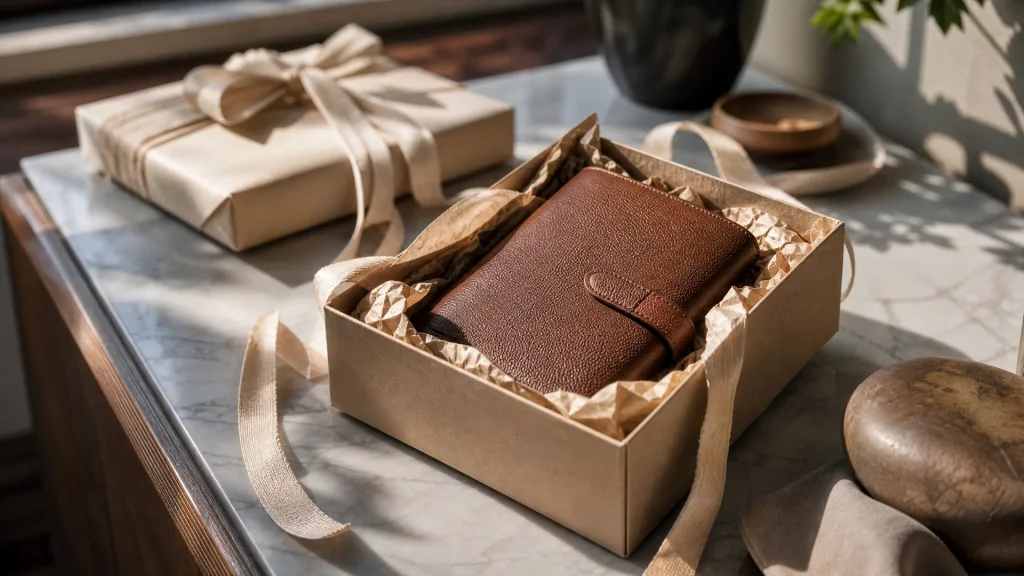
Corporate gifting in South Africa has moved well past the era of branded pens and generic hampers. The conversation that dominated global marketing feeds around 2024 gifting trends has since matured, in the South African context, it’s sharpened into something more accountable and more strategic. Today’s recipients expect more. Today’s budgets demand precision. And today’s brand managers can’t afford to put their logo on something that ends up in a drawer.
Why Corporate Gifting Trends Matter More Than Ever in South Africa
Gifting is no longer a line item you tick off at year-end, it’s a deliberate brand strategy tool. Used well, it builds relationships, reinforces culture, and keeps your brand visible long after the occasion has passed.
The SA market adds its own pressures. Tighter procurement budgets, stricter corporate ethics policies, and recipients who can immediately tell when something was bulk-ordered and branded as an afterthought, these realities mean a “good enough” gifting programme is no longer good enough. Getting this right requires intent, not just a catalogue.
Trend 1: Personalised Corporate Gifts Are Replacing Generic Giveaways
The shift is clear: volume is out, relevance is in. Brands that once ordered 500 of the same item are now asking better questions, who is this for, what do they actually use, and what moment does this gift mark?
What personalisation actually looks like in practice
Personalisation doesn’t always mean laser-engraving a name (though that helps). It means role-based curation, a field sales team gets a durable on-the-go kit; a remote developer gets a desk-focused bundle. It means occasion-specific packaging for onboarding, work anniversaries, or client milestones. And it means choosing products that reflect the recipient’s world, not just the sender’s brand guidelines.
Name personalisation remains powerful because it signals that someone made a decision about this person specifically. Combined with a handwritten note or a curated insert card, it transforms a product into a moment.
SA audience preferences to keep in mind
South African recipients respond well to gifts that feel considered, items with a clear “they thought about me” quality. Personalised corporate gifts that acknowledge a recipient’s role, tenure, or contribution consistently outperform generic giveaways in recall and goodwill. Culturally, gifting here carries weight; a poorly chosen gift can feel dismissive, while a well-chosen one builds genuine loyalty. Factor in language diversity and regional differences when crafting gift messaging at scale.
Trend 2: Sustainable Gifting Is Now a Stakeholder Expectation
Sustainability has crossed from trend to expectation. Corporate ESG commitments have made it harder for procurement teams to justify gifts that contradict their own environmental reporting. The sustainable gifting choices shaping SA corporate programmes in 2026 aren’t driven by marketing alone, they’re driven by board-level mandates.
Eco-friendly materials gaining ground in SA
Recycled materials, natural fibres, FSC-certified wood, and bamboo-based products are all gaining ground. Reusable branded drinkware, insulated tumblers and travel mugs, has become one of the most requested sustainable gift categories among SA corporates, because recipients use them daily, keeping your brand in hand long after the gift was given. Minimal packaging, seed paper inserts, and carbon-offset delivery options are moving from “nice idea” to standard request. Browse eco-friendly branded merchandise for categories that meet this brief without compromise.
Avoiding greenwashing: what to look for
Recipients can tell the difference between a genuinely sustainable product and one with a green sticker on it. Look for verifiable material certifications, transparent supply chain sourcing, and products designed for long-term use rather than novelty. A bamboo item that breaks in a week isn’t sustainable, it’s a landfill item with better PR. Ask your gifting partner for material data sheets and sourcing information before committing. Vague claims like “eco-conscious” without specifics are a red flag.
Trend 3: Experiential and Tech Gifts Are Outperforming Traditional Merchandise
Two categories are consistently delivering stronger brand recall right now: experiential corporate gifts and tech promotional gifts. They serve different moments, but both share the same advantage, they’re used, not stored.
Experiential gifting in SA has expanded beyond event tickets. Workshop-in-a-box sets, curated tasting experiences, wellness kits, and activity vouchers give recipients something to do, which creates a memory rather than just an item. For client retention and executive gifting, experience-led options are outperforming traditional merchandise across the board.
On the tech side, hybrid work remains a fixture of SA corporate culture, and tech promotional gifts are well-positioned to serve that reality. A hybrid-work tech gift kit, branded wireless earbuds, a USB hub, and a notebook, works in both home-office and boardroom settings, extending brand visibility well beyond a single gifting moment. Wireless chargers, branded earbuds, and portable power banks carry daily-use frequency, which compounds brand exposure in a way a desk trinket never will.
Gifting that earns a permanent place in someone’s daily routine, on their desk, in their bag, in their hand, is the highest ROI a branded item can achieve. Novelty fades; utility compounds. If you want to understand how intentional product choices translate into measurable brand value, see how branded merchandise drives lasting ROI at events.
Gift-Giving Etiquette: What SA Corporates Get Wrong
Corporate gifting in South Africa operates inside a real compliance framework, and many gifting programmes are built without a compliance check, creating reputational risk.
South Africa’s Prevention and Combating of Corrupt Activities Act (PRECCA) sets clear obligations for businesses around gifts to public officials and clients in regulated industries. Gifts to government employees or officials can constitute corrupt activity if they could reasonably be seen as influencing a decision. The threshold isn’t just about value, it’s about context, relationship, and timing.
Beyond PRECCA, sector-specific gifting policies in financial services, healthcare, and state-owned entities add another layer. Many institutions require employees to declare gifts above a set value, often R500 to R1,000 depending on internal policy, and some prohibit acceptance outright. Timing matters too: gifting during an active tender process is a serious risk regardless of the item’s value.
Practical gift-giving etiquette for SA corporates comes down to three things: know your recipient’s sector policies, keep value proportionate to the relationship, and document your gifting programme. Brands working with a strategic gifting partner, rather than sourcing ad hoc, can navigate this confidently, because compliance considerations get built into the process from the start.
How to Build a Smarter Corporate Gifting Strategy for 2026
By 2026, the brands winning at gifting aren’t spending more, they’re spending better.
Matching the gift to the goal
Start with the objective, not the product. Retention gifting looks different from acquisition gifting, which looks different from internal recognition. A client who just renewed a three-year contract deserves something that marks the moment; a new prospect needs something that introduces your brand memorably without overcommitting. Map your gifting programme to these distinct goals before you open a catalogue.
Occasion matters, but goal matters more. A birthday gift sent to the wrong person, because it was on a list, does less for your brand than a well-timed, goal-aligned gift to the right one. Use a practical guide to corporate gift ideas for SA employees to ground your internal recognition strategy in what actually works locally.
Budget shifts: doing more with considered spend
The dominant mindset across SA corporate gifting right now is quality over quantity. Fewer, better gifts, supported by thoughtful packaging and a clear message, consistently outperform bulk giveaways on brand recall and recipient sentiment.
Budget pressure is real, but it’s also clarifying. It forces you to prioritise the relationships and occasions that genuinely matter, rather than gifting by default. Plan lead times early, custom and personalised items in South Africa typically require four to six weeks of production time, and Q4 pressures compound quickly.
Think in programmes, not one-off buys. A gifting programme that touches clients at onboarding, at renewal, and at a milestone builds a cumulative brand impression that a single hamper never achieves. MerchGuru is backed by Abstract7 Creative Media Solutions, a PR and communications consultancy with over 25 years of branding experience in the South African market, that grounding shapes every gifting recommendation the team makes, from product selection to compliance-aware strategy.
If 2026 gifting deadlines are already on your radar, now is the right time to explore a done-for-you sourcing consultation, not in Q4 when lead times are squeezed and options narrow. Connect with the MerchGuru team or browse the curated gifting range to start building a programme that works as hard as your brand does.