
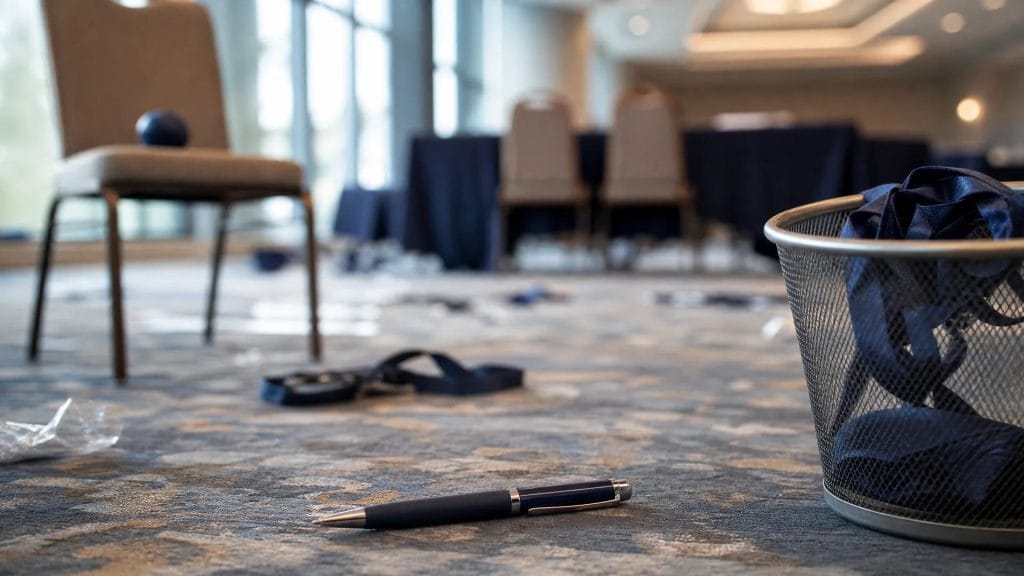
Walk out of any conference in South Africa and you’ll see the evidence on the floor: branded pens abandoned on registration tables, lanyards stuffed into bins, stress balls left on chairs. None of it is an accident. It’s the predictable result of choosing branded merchandise for corporate event giveaways based on budget alone, instead of thinking about what a person will actually do with the item once the event ends.
This article is about closing that gap. Choosing the right giveaway isn’t a line-item decision. It’s a strategic one that determines whether your brand rides home with a delegate or gets left behind in a conference hall. Get it right, and you buy weeks or months of quiet, repeated brand recall. Get it wrong, and your spend disappears with the cleaning crew.
Why Most Corporate Event Giveaways End Up in the Bin
Generic giveaways fail for one simple reason: they don’t solve a problem the recipient actually has. A branded pen is only useful if someone needs a pen right then, and even then, it’s replaceable by the dozen. A stress ball has no function once the stress of the event has passed. These items get made, branded, boxed, and handed out, then discarded, because they never earned a place in someone’s bag, desk, or daily routine.
The kept-vs-binned decision: what triggers each
The decision to keep or bin happens in seconds. Three questions drive it, whether the recipient asks them consciously or not: Will I use this again? Does it fit my life or work? Is it good enough quality to be worth keeping? If the answer to any of those is no, the item is gone before the event has even finished. If the answer is yes across the board, the giveaway becomes a small daily reminder of your brand, which is exactly the outcome procurement and marketing teams should be optimising for. Understanding why branded merchandise for events drives lasting ROI starts right here, at this split-second judgment call.
Matching Branded Giveaways to Event Type and Audience
Not every event calls for the same giveaway, because not every audience has the same needs. A giveaway that performs brilliantly at a trade show can fall flat at an internal staff activation, and vice versa.
Conferences and trade shows vs. internal activations
Conference and trade show delegates are moving between sessions, carrying bags, and juggling other people’s branded handouts all day. They respond to items that are compact, genuinely useful during the event itself, and easy to carry home on a flight. Branded giveaways for conferences work best when they solve an immediate, practical problem: a way to charge a phone, carry notes, or stay hydrated between sessions.
Internal activations and customer experience days are different. The audience is smaller, often more brand-loyal already, and the goal is usually deeper engagement rather than broad reach. Here, a more considered or premium item can make sense, because you’re rewarding an existing relationship rather than introducing your brand to a stranger. This is where event activation merchandise in South Africa needs to feel less transactional and more like a genuine thank-you.
Reading your audience before you brief a supplier
Before you brief a supplier, ask who is actually receiving the item. Are they senior decision-makers or entry-level attendees? Will they be outdoors or in an air-conditioned hall? Are they local or flying in? These details change what “useful” means for that specific group, and they should shape your shortlist before you even look at a product catalogue. Getting this right also feeds directly into a stronger trade show merchandise strategy for future events, because you start building a pattern of what works for your specific audience.
The Psychology of Utility: Why Daily-Use Items Win
The logic behind high-retention merchandise is simple: the more often someone touches an item, the more often they see your brand. A mug used every morning puts your logo in front of someone daily, without you spending another rand on media. A notebook carried into meetings does the same. A charger or power bank sits in a bag or on a desk, visible every time it’s needed.
Novelty items, by contrast, get used once, if at all, and then forgotten. They might get a laugh at the event, but they don’t earn a permanent spot in someone’s life. This is the core principle behind memorable event merchandise: recall isn’t built through cleverness alone. It’s built through repetition, and repetition only happens when an item has a genuine daily function.
Budget Tiers and What They Unlock for Brand Impact
Budget isn’t just about how much you can afford per item. It’s about matching spend to the importance of the event and the seniority of the audience. A mass conference giveaway for hundreds of delegates has a very different budget logic to a boardroom gift for ten key clients.
Entry-level vs. premium giveaway spend
Entry-level spend works well for high-volume distribution, where the goal is broad, repeated brand exposure: think branded notebooks, tote bags, or basic drinkware handed out to every delegate at registration. Premium spend makes sense when the audience is smaller and more strategically valuable, such as VIP clients or senior stakeholders, where a higher-quality item signals that the relationship matters. In both cases, bulk pricing helps stretch your budget further without compromising on the quality that determines whether an item gets kept. Reviewing bulk promotional merchandise pricing before you commit to a category helps you set realistic expectations for both the quantity and quality you can afford at each tier.
South African Event Considerations: Climate, Culture, and Practicality
South Africa’s events landscape has its own practical realities, and giveaway choices should reflect them. Summer heat at outdoor conferences and festivals makes hydration a genuine concern, not just a nice-to-have. A branded insulated water bottle handed out at an outdoor conference in Johannesburg’s summer heat solves a real delegate need, which is why it tends to travel home with them instead of into the venue bin.
Load shedding is another factor that shapes what counts as useful here. Portable tech items like power banks and branded USB lights hold practical daily value for South African professionals well beyond the event itself, because they address a genuine, ongoing inconvenience rather than a one-off event moment. Long commutes on top of unpredictable power schedules mean these items get used far more often than a desk ornament ever would.
Sun exposure at outdoor activations also makes items like caps, sunglasses, or lip balm with SPF genuinely welcome rather than throwaway extras. And with many events moving between indoor venues and outdoor spaces in a single day, versatility tends to outperform anything too situation-specific.
High-Retention Giveaway Categories: Drinkware, Apparel, and Tech
Three categories consistently outperform novelty items when it comes to corporate swag ideas South Africa marketers can rely on: drinkware, apparel, and tech.
Drinkware, water bottles, insulated flasks, and coffee cups, earns daily use because hydration and caffeine are universal habits. A well-made bottle or mug becomes part of someone’s morning routine almost immediately, and it’s a category worth exploring further through branded drinkware for gifting, which covers how the same principles apply to client relationships beyond events.
Apparel, particularly quality T-shirts, jackets, or caps, works because clothing gets worn repeatedly if it fits well and looks good. Poor-quality branded apparel gets binned fast; well-made pieces become genuine wardrobe staples.
Tech items, power banks, USB lights, and portable chargers, combine daily utility with a longer shelf life than most other categories, because technology needs are constant and growing.
Custom vs. ready-to-brand under event deadlines
When an event deadline is tight, the choice between fully custom merchandise and ready-to-brand stock becomes critical. Custom items, with unique shapes, colours, or packaging, take longer to produce but offer a more distinctive brand moment. Ready-to-brand products, already manufactured and simply decorated with your logo, can be turned around far faster, which makes them the safer choice when your event date isn’t moving. A closer look at the custom vs ready-to-brand merchandise guide can help you weigh design ambition against realistic turnaround before you commit to a supplier.
Briefing Your Merchandise Partner for Event Success
A strong giveaway starts with a clear brief. Before you approach a supplier, be ready to answer four questions: Who is the audience, and what do they actually need? What’s the goal: broad awareness, deeper client loyalty, or internal culture-building? What’s the real event date, working backward to allow for production and delivery? And what’s the budget per item, once quantity and quality are both accounted for?
Sharing these details upfront, rather than starting with a product list, lets a supplier recommend items that fit your actual goals instead of just what’s in stock. It also helps you plan realistically. Planning your branded merchandise turnaround time well before your event date avoids last-minute compromises on quality or category.
MerchGuru pairs a self-serve online store with a done-for-you sourcing service, so marketing teams can move from concept to branded stock without managing multiple suppliers under event deadlines. Backed by Abstract7 Creative Media Solutions’ 25+ years of branding and communications experience, MerchGuru treats every giveaway as a storytelling touchpoint rather than a line-item purchase. If you’re starting from scratch, it’s worth reviewing how to choose branded merchandise for your brand as a foundation before applying the event-specific thinking covered here.
If your next event is approaching and you want giveaways that people actually keep, reach out to MerchGuru’s done-for-you sourcing service for a custom quote and strategy consult tailored to your audience, timeline, and budget.